Die-Cut Boxes and Shelf Ready Packaging (SRP) That Stand Out on the Shelf
A die-cut box is a corrugated box cut and formed with a cutting die, a wooden board fitted with steel rule blades. This allows complex structures such as tear-off perforations, openings, windows, built-in lock bottoms, and tabs that lock into the corners without glue or tape. It suits SRP and display trays that work as both a shipping box and a product display at the point of sale.

Auto Boxes die-cuts with two types of cutting die. A flatbed die is a flat wooden board fitted with steel rule blades that presses down on one sheet at a time, which suits detailed shapes, perforations and cut-outs that need high accuracy. A rotary die is a curved wooden board with blades that wraps around a cylinder and cuts the board continuously as it passes through, which makes it fast and well suited to large runs of simpler shapes. The strengths of die-cutting are a precise fit to the product and its marketing uses, especially SRP and display trays, which serve as the shipping box and the point-of-sale (POS) display in one.
Box Styles in This Group
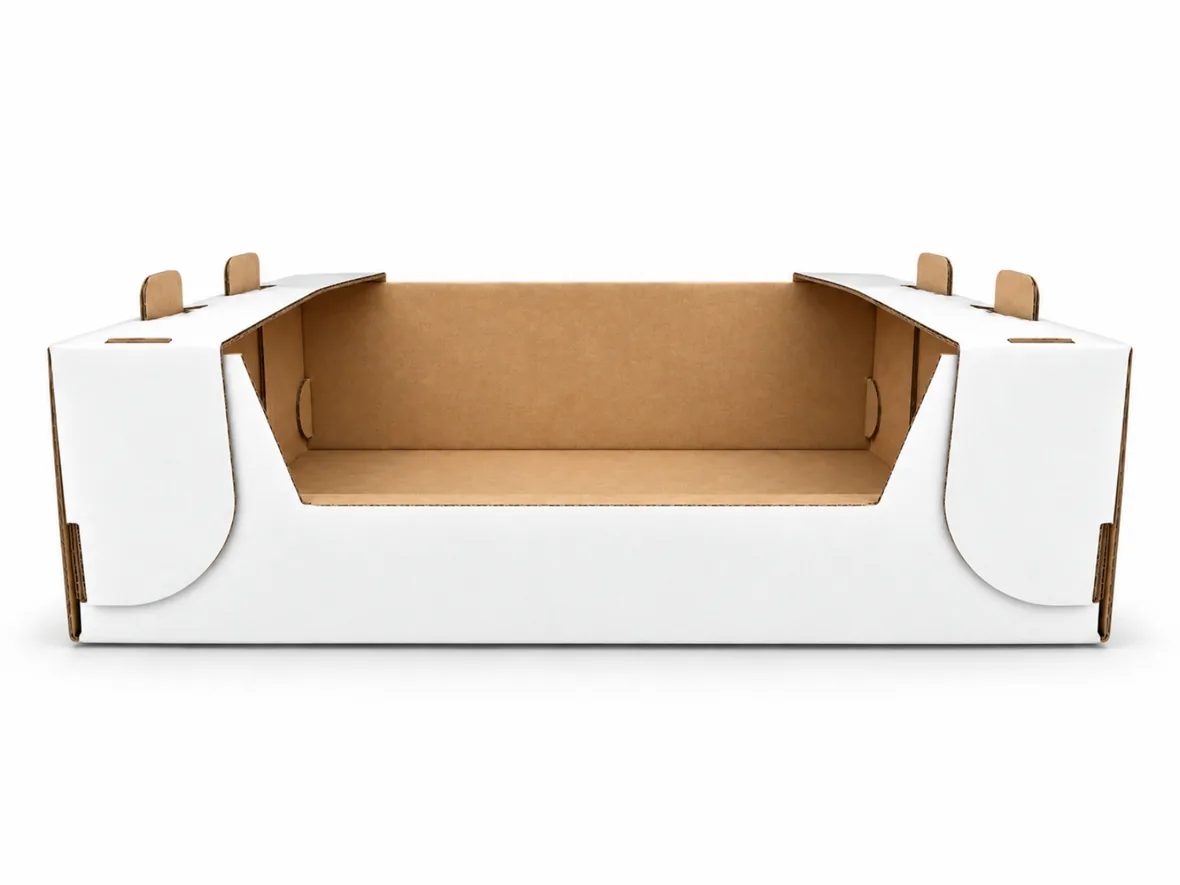
Shelf Ready Packaging
A box that tears open along a perforation and goes straight onto the shelf without restacking the products. Staff can restock the shelf faster, and the display stays neat. More and more brands selling through retail chains and modern trade are choosing this format.
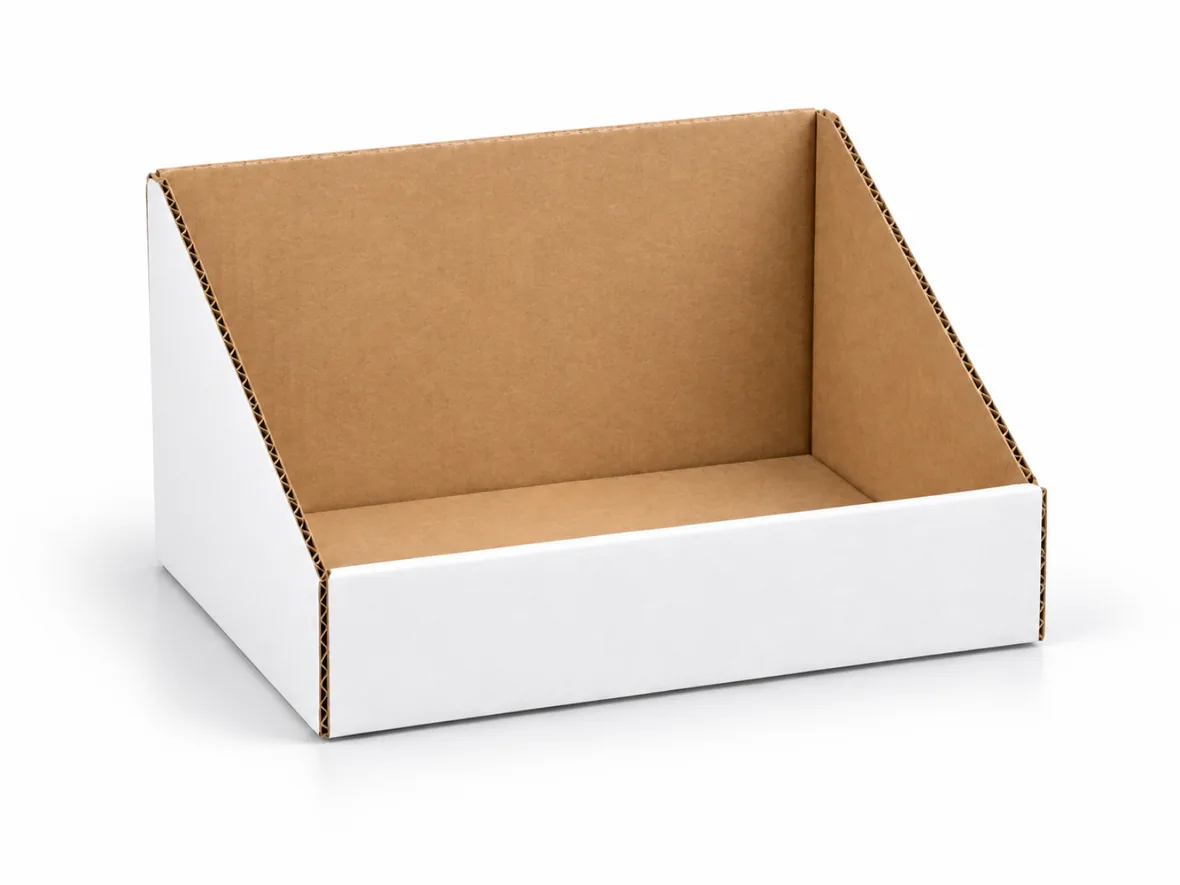
Display Tray
A floor-standing or countertop tray for displaying products, formed from a single die-cut sheet with corners that fold together without glue. It is light yet holds its shape well, and its open design keeps every product clearly visible.
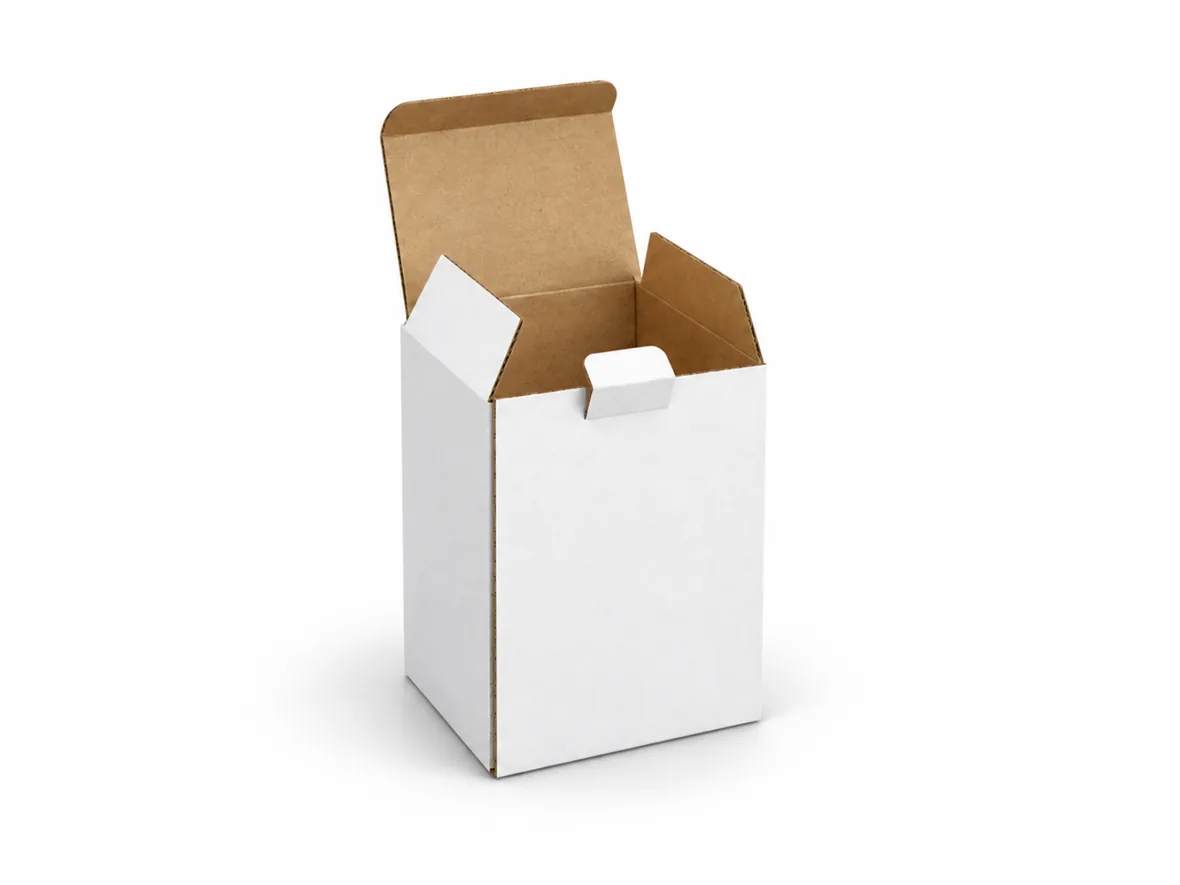
Tuck Top with Snap-Lock Bottom
Combines a tuck-in top flap with a snap-lock (1-2-3) bottom in one box. The top opens and closes easily, and the bottom folds and locks without glue or tape, so it carries weight well and assembles quickly by hand. Suits retail products that need a strong base, such as cosmetics, supplements and small items.
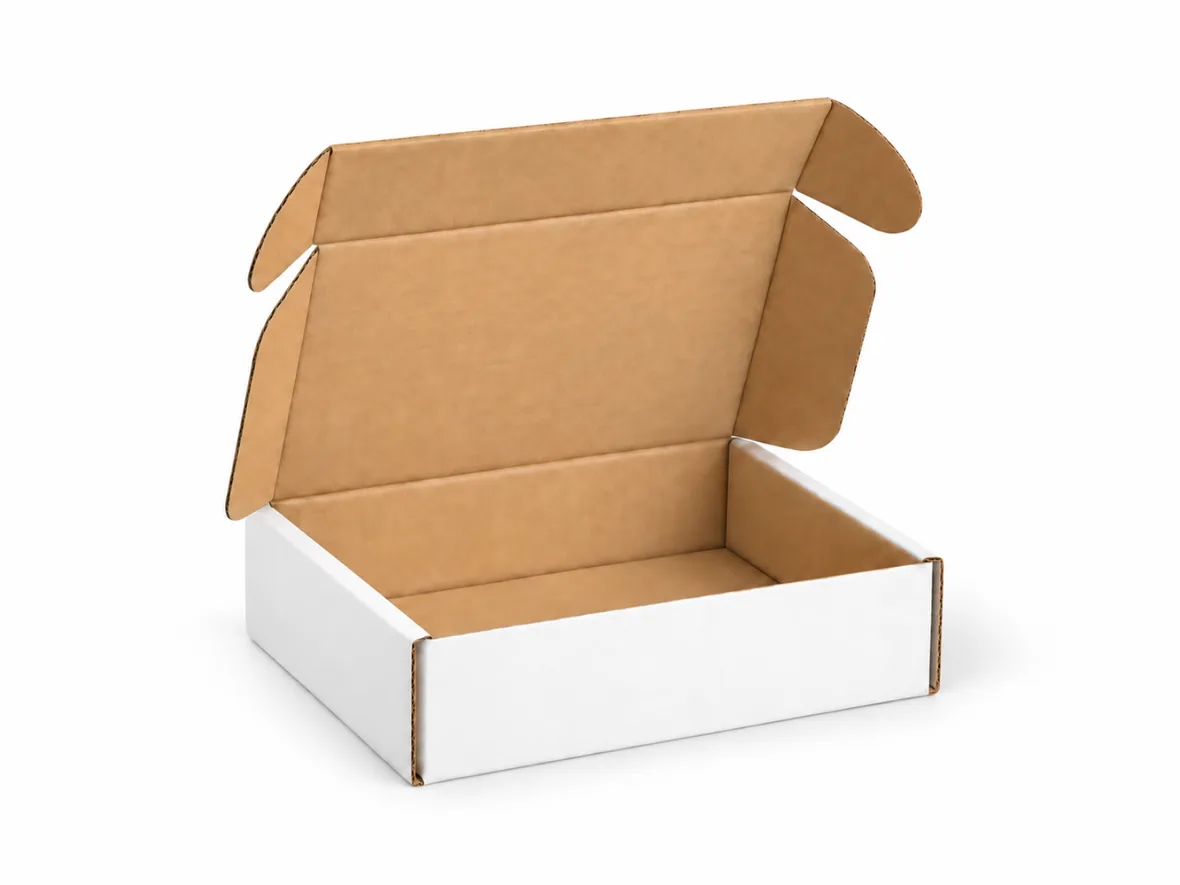
Ear-Flap Mailer / Roll End Tuck Top
A box with locking side flaps shaped like elephant ears. The front lid tucks in and locks while the side flaps hold the shape firmly, so it opens easily yet stays secure in transit. In Thailand it is widely known in e-commerce as the elephant-ear box.
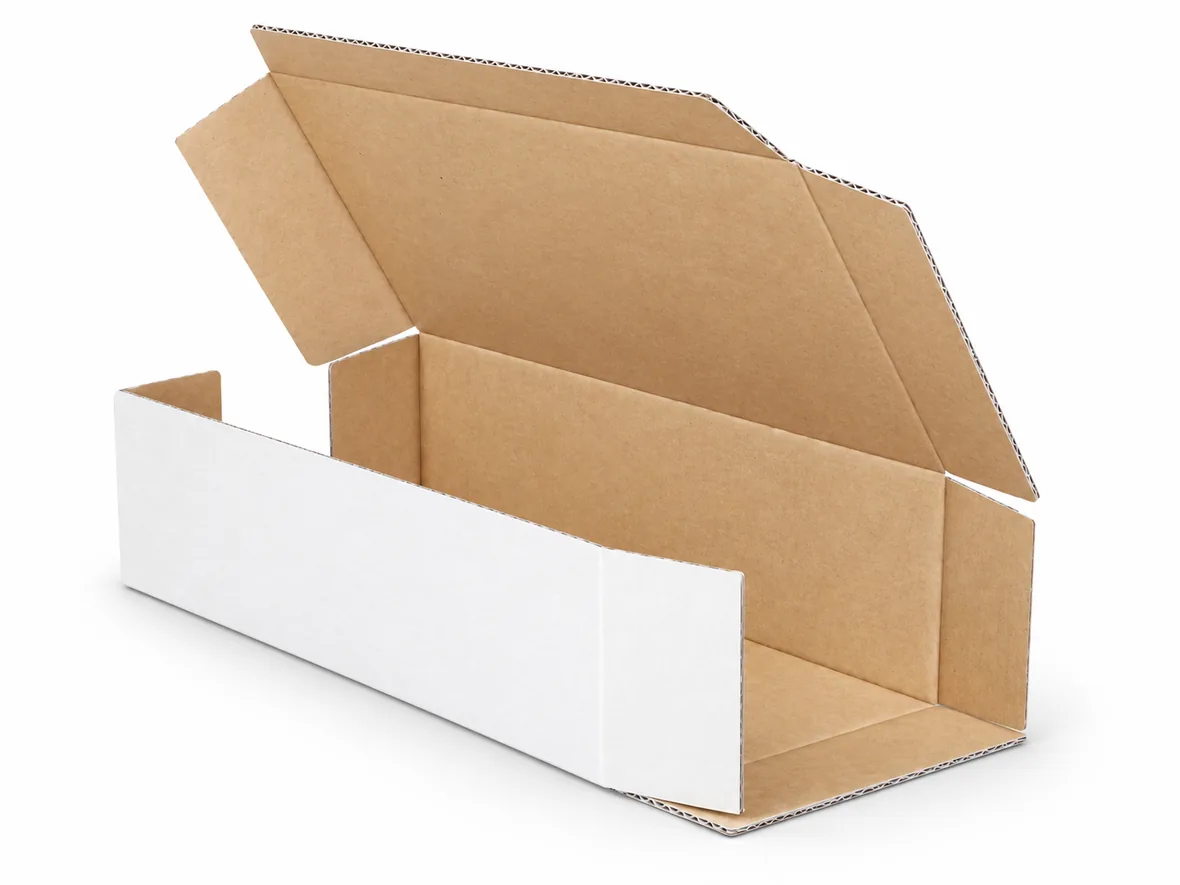
Wrap-Around Blank
A corrugated sheet cut to a specific pattern and fed into an automatic wrap-around case packer, which folds it around the product and seals the edges with hot-melt glue. It saves warehouse space and forms at high speed on the line, and is the main format in the beverage and canned food industries.
Choosing a Die-Cut Box Spec: What to Know Before You Order
Start with the role of the box
The first factor in a die-cut box spec is the role of the box at its destination: whether it goes on display in store or travels as a shipping box.1. Boxes that go on the shelf, such as SRP and display trays
- Choose white-top liner (WS) so print looks brighter and colors are more accurate than on brown kraft.
- Choose E flute for clean cuts and a smooth surface with fewer visible fold marks than thicker flutes.
- Choose KI or KA grade in B flute for better cushioning and resistance to hot, humid conditions.
- Self-locking shapes that need no tape save packing time on the line.
- Every die-cut design has a cutting die cost on top of standard cutting, paid once when the design is first made.
- The price depends on the size and complexity of the shape. Our team prices each design and states it on the quotation.
- Repeat orders of the same design use the same cutting die, with no further charge.
💡 How SRP Reduces Lost Sales on the Shelf
Research on on-shelf availability in the consumer goods industry found that about 75% of out-of-stocks originate in store processes, and about 25% of all cases are products already in the store that have not reached the shelf. What drives this second group is slow restocking: staff have to open each case and place products on the shelf one by one. An SRP case tears open along its perforation and goes onto the shelf as a whole tray. Removing the opening and stacking steps shortens every restocking round.Source: Gruen & Corsten, A Comprehensive Guide to Retail Out-of-Stock Reduction in the Fast-Moving Consumer Goods Industry (2007), published with the Grocery Manufacturers Association